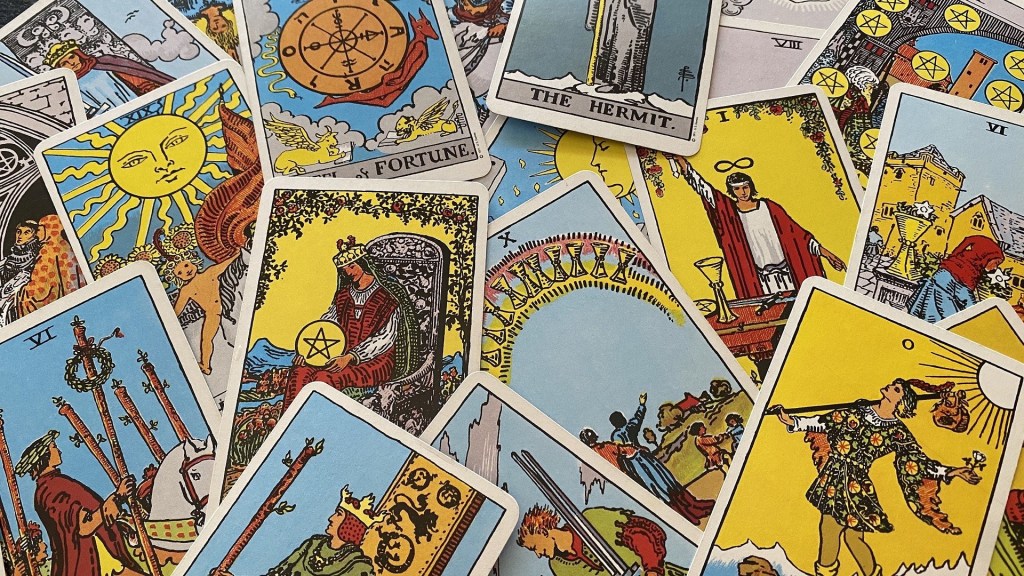
In the rich tapestry of tarot’s history, few figures stand out as prominently as Arthur Edward Waite and Pamela Colman Smith. Their collaboration in the early 20th century led to the creation of the iconic Rider-Waite-Smith Tarot deck, a cornerstone of modern tarot practice. This dynamic duo brought together their unique talents and visions to craft a deck that continues to inspire and guide tarot enthusiasts around the world.
Arthur Edward Waite: The Scholar and Mystic
Arthur Edward Waite was an English occultist and scholar, renowned for his extensive writings on esoteric subjects. Born in 1857, Waite was a member of the Hermetic Order of the Golden Dawn, where he immersed himself in the study of mysticism and the occult. His scholarly approach to the tarot was deeply informed by his desire to uncover the hidden truths within mystical traditions.
Waite’s goal was to create a tarot deck that was not only visually appealing but also rich in spiritual symbolism and meaning. He sought to move beyond the mere fortune-telling aspects of tarot and instead highlight its potential as a tool for personal and spiritual development.
Pamela Colman Smith: The Artistic Visionary
Pamela Colman Smith, often affectionately referred to as “Pixie,” was an artist and illustrator with a keen eye for capturing the mystical and the magical. Born in 1878 in England, Smith’s artistic talents were evident from a young age. She was also a member of the Golden Dawn, where she and Waite crossed paths and began their collaboration.
Smith’s contribution to the Rider-Waite-Smith Tarot was monumental. Her vibrant illustrations infused the deck with life and character, making it accessible and appealing to a broad audience. Unlike previous decks, where the Minor Arcana cards were often depicted with simple pip designs, Smith’s artwork for each card was rich with narrative and symbolism, allowing for deeper interpretation.
The Creation of the Rider-Waite-Smith Tarot
The collaboration between Waite and Smith resulted in a tarot deck that was revolutionary for its time. Published in 1909 by the Rider Company, the Rider-Waite-Smith Tarot introduced several innovations that set it apart from earlier decks:
- Detailed Imagery: Each card, especially in the Minor Arcana, was illustrated with scenes that depicted the card’s meaning, inviting readers to delve into the narrative and symbolism.
- Universal Themes: The deck’s artwork encapsulated universal themes and archetypes, making it accessible to people from diverse cultural backgrounds.
- Esoteric Symbolism: Drawing from Waite’s extensive knowledge of mysticism and Smith’s artistic flair, the deck incorporated a wealth of esoteric symbols, bridging the gap between various spiritual traditions.
The Enduring Legacy
The Rider-Waite-Smith Tarot has become one of the most popular and enduring tarot decks in history. Its influence can be seen in the countless decks that followed, many of which draw inspiration from its structure and symbolism. Waite and Smith’s collaboration has inspired generations of tarot enthusiasts, artists, and scholars to explore the depths of tarot as a tool for introspection, guidance, and transformation.
Conclusion
Arthur Edward Waite and Pamela Colman Smith left an indelible mark on the world of tarot. Their combined talents produced a deck that not only revolutionized tarot practice but also enriched the spiritual lives of countless individuals. As we continue to explore the mysteries of tarot, we owe much to Waite and Smith for their visionary contributions. Their work reminds us of the power of collaboration and creativity in unveiling the mystical dimensions of the human experience.
 Tarot with KatLou
Leave a comment