Welcome back to my tarot blog! Today, we delve into one of the most renowned and detailed tarot spreads—the Celtic Cross. Esteemed for its ability to provide an in-depth analysis of complex situations, the Celtic Cross is a favorite among tarot readers for uncovering nuances and offering a holistic view of the issues at hand.
Understanding the Celtic Cross Spread
The Celtic Cross consists of ten cards, each with a specific position and meaning. This spread allows you to explore various aspects of a question or situation, providing comprehensive insights and guidance. The positions in the Celtic Cross cover the past, present, future, and everything in between, offering a detailed narrative.
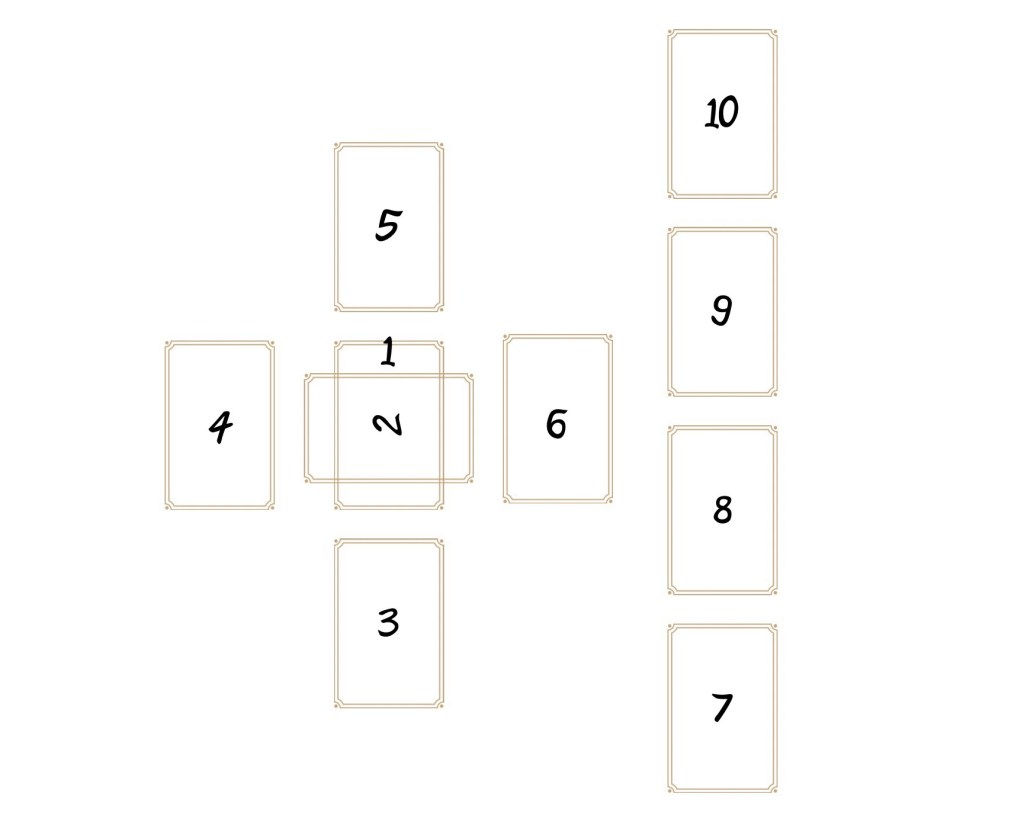
The Positions in the Celtic Cross Spread
Here is a breakdown of the ten positions in the Celtic Cross spread, along with their meanings:
- The Significator or Present Situation
- Purpose: Represents the current situation or the question being asked. It sets the tone for the rest of the reading.
- The Challenge or Crossing Card
- Purpose: Identifies the primary obstacle or challenge facing the querent. This card is placed horizontally across the first card.
- The Foundation or Beneath
- Purpose: Highlights the underlying factors or subconscious influences affecting the situation. It reveals the root cause or basis of the issue.
- The Recent Past
- Purpose: Reflects recent events or experiences that have led to the current situation. This card provides context and background.
- The Conscious Mind or Crown
- Purpose: Represents the querent’s conscious thoughts, goals, or attitudes regarding the situation. It indicates what is currently on their mind.
- The Near Future
- Purpose: Suggests upcoming events or developments in the near future. This card provides a glimpse into what may unfold soon.
- The Querent’s Attitude or Self
- Purpose: Reflects the querent’s current attitude, self-perception, or feelings about the situation. It offers insight into their internal state.
- External Influences
- Purpose: Highlights factors outside the querent’s control, such as other people’s influence or environmental conditions.
- Hopes and Fears
- Purpose: Reveals the querent’s hopes, fears, and expectations. This card can reflect both positive aspirations and underlying anxieties.
- The Outcome
- Purpose: Indicates the likely outcome or resolution of the situation based on the current trajectory. This card provides insight into the potential future.
Conducting a Celtic Cross Reading
To perform a Celtic Cross reading, follow these steps:
- Set the Intention: Clearly articulate the question or situation you wish to explore. This focus will guide the reading.
- Shuffle and Draw the Cards: As you shuffle the tarot deck, concentrate on your question. When ready, draw ten cards and lay them out in the Celtic Cross pattern.
- Interpret Each Position: Analyze each card based on its position and its traditional meaning. Consider how the cards interact and the narrative they create.
- Synthesize the Spread: Look for overarching themes and connections between the cards to form a cohesive interpretation. Reflect on the guidance offered by the spread.
Tips for an Effective Celtic Cross Reading
- Take Your Time: The Celtic Cross is a detailed spread, so allow ample time to fully explore each card and its implications.
- Trust Your Intuition: While traditional meanings offer guidance, your intuition can provide additional insights and nuances.
- Record Your Reading: Keeping a tarot journal can help track your interpretations and personal growth over time.
Thank you for joining me on this exploration of the Celtic Cross tarot spread. This powerful tool can offer profound insights and clarity into complex situations. In future posts, we’ll continue to delve into the world of tarot, exploring spreads, card meanings, and personal stories. Until then, may the wisdom of the cards guide your journey and illuminate your path.
 Tarot with KatLou
Leave a comment